What is an autoclave?

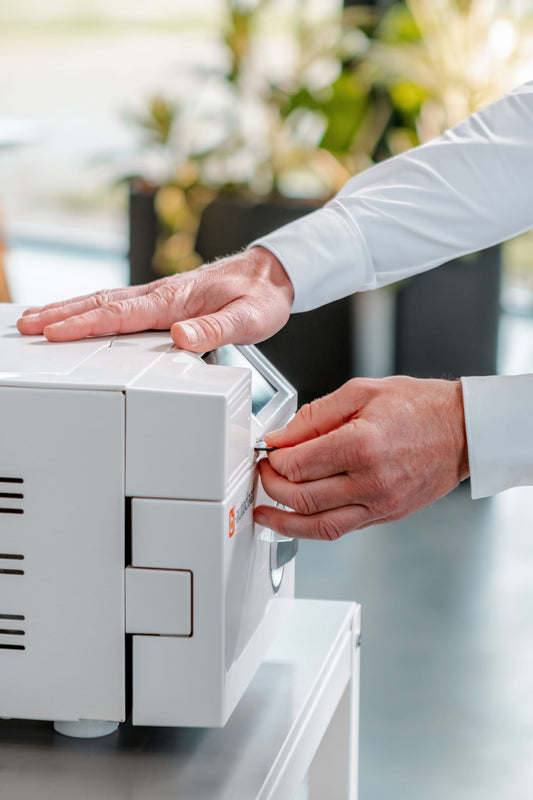
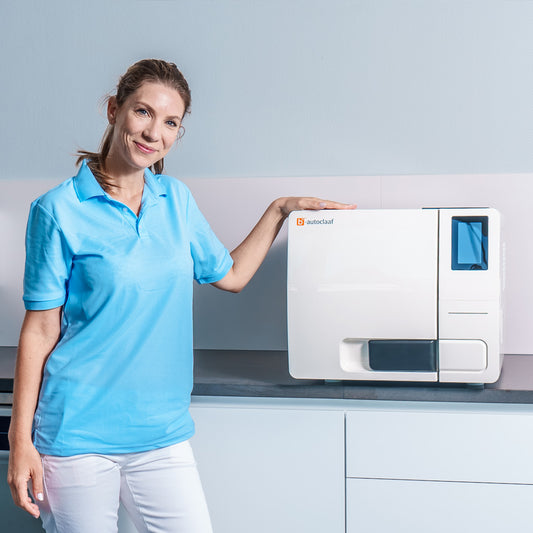
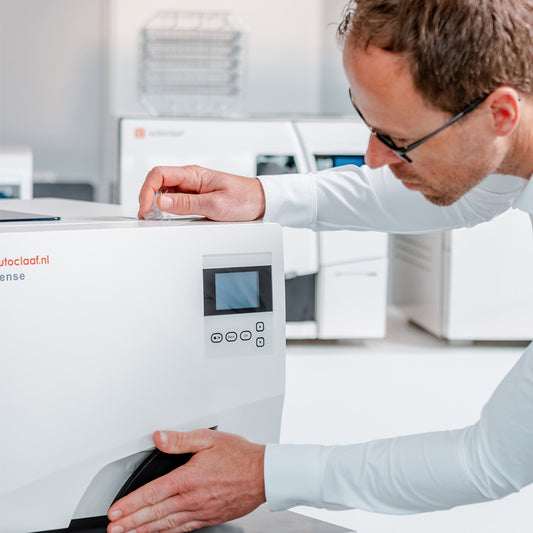
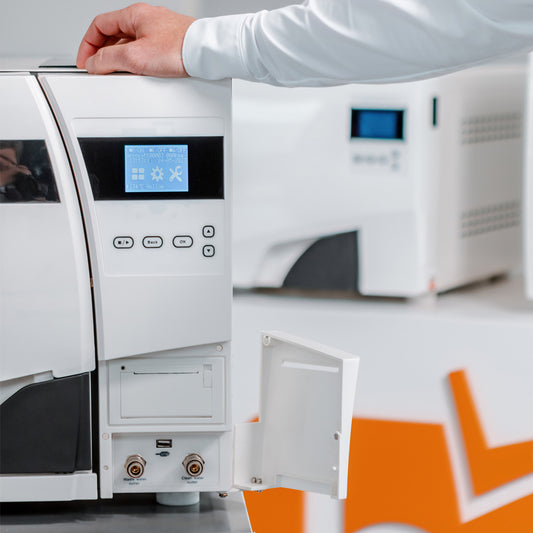
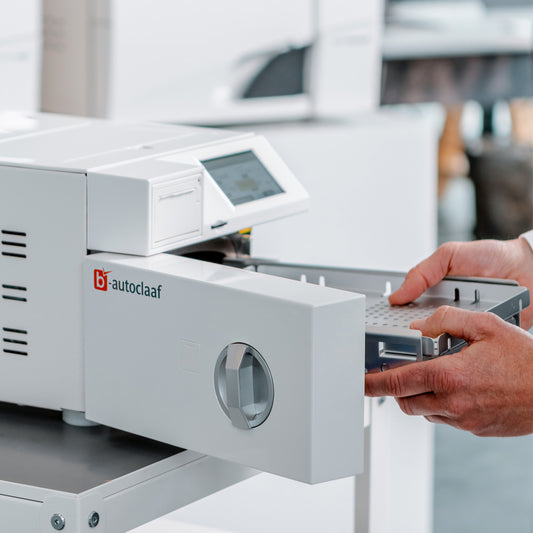
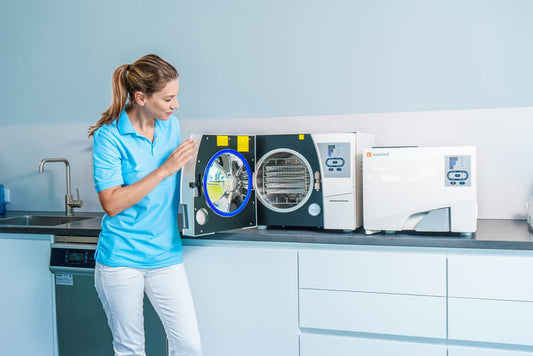
Sterile instruments are the basis of any safe treatment and build trust among patients and customers. The key to absolute hygiene lies in the autoclave, a medical device that sterilises using saturated steam under pressure. This reliably kills even resistant germs, spores and bacteria, leaving instruments completely germ-free. This process, known as autoclaving, is considered the gold standard of sterilisation and is indispensable in modern practices and clinics.

Your advantages with B-Autoklav

  • Free shipping within Germany and Austria
  • Two-year warranty on all autoclaves
  • Easy installation with clear video instructions
  • Compatible with Dios practice software
  • Maintenance and validation by trained technicians
View our autoclaves

What are autoclaves?

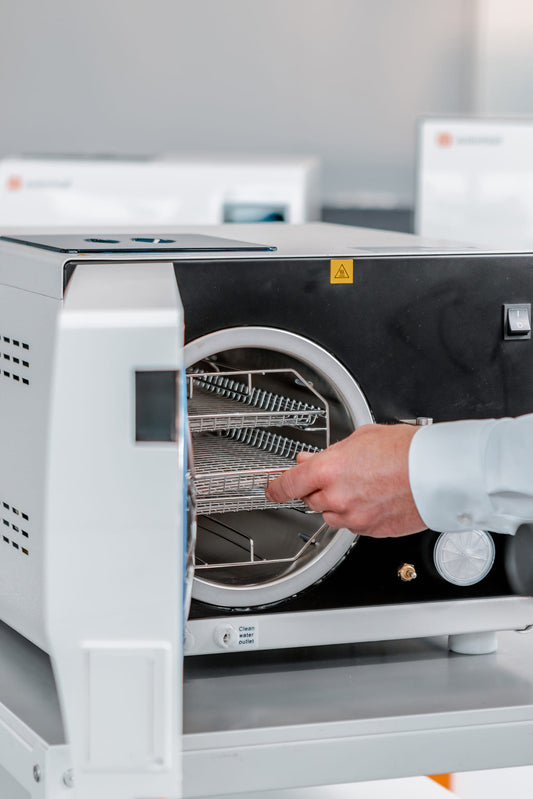
The term autoclave comes from the Latin word autoclavis, which means ‘self-sealing’. It refers to a pressure-resistant container in which steam is generated under high pressure to safely sterilise instruments. Modern autoclaves operate at temperatures ranging from 121 to 134 °C and, thanks to the overpressure, reach even the smallest cavities where other methods fall short. This allows them to provide fast, effective and validated sterilisation, making them indispensable in medical and paramedical institutions.

What is a steriliser?

A steriliser is a device that produces hot, dry air to kill microorganisms. The temperature determines the time required for the sterilisation process. At 160 degrees Celsius, the process takes an hour and a half; at 190 degrees Celsius, it takes sixty minutes.

Autoclave Steriliser: difference with hot air sterilisation

People often ask: hot air steriliser or autoclave, which is better? The difference lies in the sterilisation method.
Feature Autoclave / steam steriliser Hot air steriliser
Method Sterilisation with pressurised steam Dry heat without moisture
Temperature 121–134 °C 160–180 °C
Duration 15–30 minutes 60–120 minutes
Material suitability Also suitable for hollow instruments, textiles and instruments with channels Only suitable for heat-resistant metal instruments
Validation Possible according to DIN EN 13060 usually not validatable
Area of application Medicine, podiatry, cosmetics, tattooing, veterinary medicine Limited suitability for simple metal instruments

An autoclave steriliser uses pressurised steam sterilisation, while a hot air steriliser works with dry heat. The advantage of steam sterilisation is that porous materials, hollow instruments and packaged instruments can be reliably sterilised.

For practices that need to clean and sterilise instruments on a daily basis, such as dental practices, pedicure salons and cosmetic studios, an autoclave is therefore the better choice. A hot air steriliser can serve as a supplement, but does not replace an autoclave.

Our service

A reliable factor in your practice

Please let us know how we can assist you; we are here to help.

In which areas of work are we active?

Your autoclave supplier in: the Netherlands, Germany, England, France, Spain, Belgium, Luxembourg, Austria, Switzerland

More information

Our service

Your autoclave supplier in: the Netherlands, Germany, England, France, Spain, Belgium, Luxembourg, Austria, Switzerland

Get in touch

Opening hours

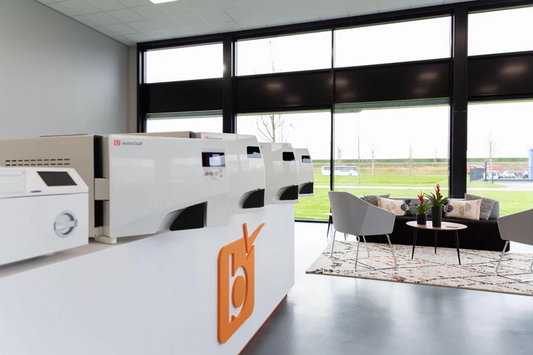
We are available by telephone on working days from 8:30 a.m. to 5:00 p.m. You are welcome to visit our showroom by appointment, until 4:45 p.m. at the latest.
Make an appointment

The autoclave process explained

During autoclaving, water is converted into steam, which reaches a temperature of over 120 °C under pressure (usually 2 to 3 bar). This steam penetrates into the smallest cracks and pores and destroys the cell structures of microorganisms.

A modern medical-grade steam steriliser performs multiple vacuum and steam phases to remove air and ensure even steam distribution – a process known as fractional vacuum technology.

The result is fast, consistent and validated sterilisation that can be accurately documented. In Germany, this form of steam sterilisation is regulated by DIN EN 13060 and is regularly monitored. Regular maintenance and inspection of the autoclave are mandatory to ensure continuous sterility. For more information, please visit our Customer Service page.

Advantages of an autoclave over other sterilisers

An autoclave steriliser offers numerous advantages over dry or chemical sterilisation methods:

  • Faster sterilisation thanks to pressurised steam
  • Validated processes with documentation (Helix or Bowie-Dick test)
  • Reliable results, even with hollow instruments and packaged instruments
  • Environmentally friendly, as no chemical additives are required
  • Lower energy consumption compared to hot air sterilisation
  • Suitable for a wide range of materials that are suitable for autoclaving

Whether it's a dental practice, podiatry practice, veterinary practice or beauty salon, the autoclave is the first choice for validated and hygienically safe working processes.

Meaning and materials Autoclavable

The term “autoclavable” means that an instrument or material can withstand the high temperatures and pressures in an autoclave without being damaged.

Typical autoclavable materials include:

  • Stainless steel instruments
  • Glass
  • Certain plastics (e.g. medical-grade silicone)
  • Textiles and steam-resistant rubber materials

Not all materials are suitable for steam sterilisation in an autoclave. Therefore, always check the manufacturer's instructions, for example, whether an instrument is marked as autoclavable.

Autoclave maintenance and inspection

To ensure that the sterilisation process remains safe at all times, an autoclave must be regularly maintained and inspected. This includes:

  • Inspection of seals and filters
  • Functional testing of the pressure system
  • Documentation of cycles and temperatures
  • Regular validation in accordance with DIN EN 13060

Our trained service engineers maintain your autoclave directly on site or via remote support. This ensures that your device functions correctly at all times and passes the required test cycles.

Which type of autoclave is suitable for your practice?

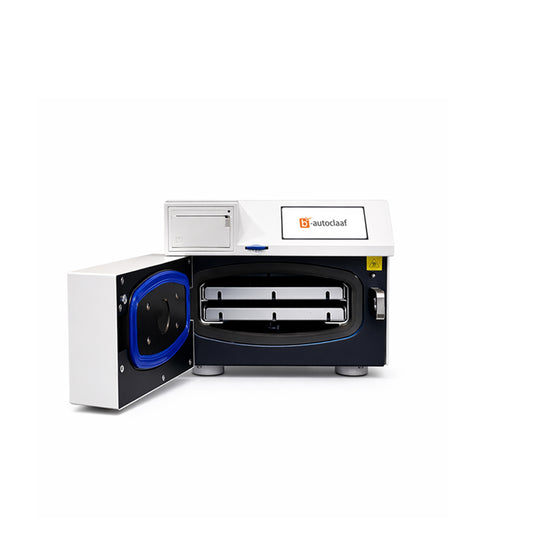
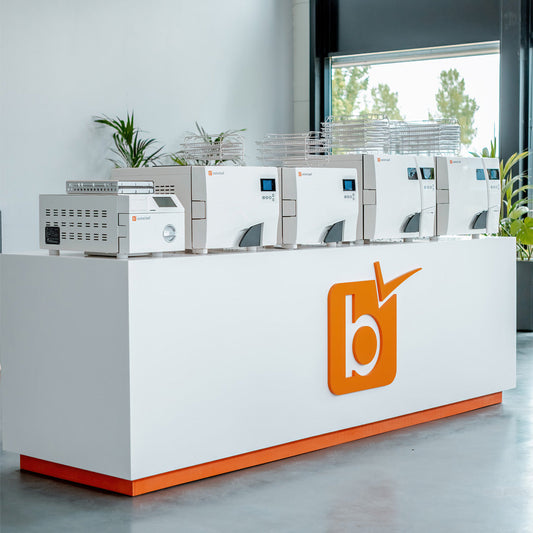
Not all autoclaves are the same: their size, capacity and functions vary depending on the type of practice. Compact models are ideal for small studios or practices, while larger autoclaves with a chamber capacity of 18 or 23 litres are designed for clinics or veterinary practices.

At B-Autoclave, you will find certified Class B steam sterilisers for:

Each model is certified according to current European safety standards and comes with a video manual, warranty and free shipping.

Why an autoclave is always worthwhile

An autoclave is more than just a sterilisation device; it is the heart of instrument cleaning in every practice.

Steam sterilisation offers the advantages of maximum safety, validated processes and time savings. Whereas a hot air steriliser can only sterilise simple, unwrapped instruments, an autoclave can sterilise even complex hollow instruments, wrapped instruments and textiles quickly, efficiently and in accordance with legal requirements.

Personalised advice for your practice

Would you like to know more about our autoclaves or find out which model best suits your practice? Our team of experts will be happy to advise you personally, by telephone or via a video call, and support you in the selection, installation and maintenance. Contact us on +31 (0)321 317 878 or send an email to info@b-autoklav.com. We are happy to help and will work with you to find the ideal solution for your needs.

Frequently asked Questions (FAQ)

Find the answers to frequently asked questions here, or feel free to contact us: 0031-321 31 78 78

What is an autoclave, explained simply?

What is the difference between an autoclave and a steriliser?

What does autoclavable mean?

What does autoclavable mean?

How often should an autoclave be serviced?